

Peachtree Wellness Solutions runs partial hospitalization and intensive outpatient programming in Peachtree City, Georgia. Some Florida families are right to make that drive, and some are better served twenty minutes from their own kitchen, so both answers get said out loud here.
Florida is a long state, and people who do not live there forget how long. From a driveway in Pensacola, metro Atlanta is closer than Miami is. From a condo off the Palmetto in Kendall, the Georgia line is most of a day and most of a tank. That one fact shapes nearly every conversation we have with a Florida caller, because “traveling for treatment” means something completely different depending on which exit you live off of.
The people who reach us from Florida are usually not shopping around. They have tried the program in town. They have sat on a waitlist since April. They have a son who finished a 30-day stay in June and was back in the same apartment with the same three contacts by July. What they want is outpatient mental health treatment with more structure than a weekly appointment and fewer walls than a hospital, and they have started wondering whether it has to be found inside the state line at all.
Sometimes it does not have to be. Distance also does not make a program better by itself. If you have been turning this over for a few weeks without landing anywhere, you are not being indecisive. Outpatient is the one level of care where distance genuinely cuts both ways, and anyone who tells you otherwise is selling something.
Tour Our Mental Health Programs

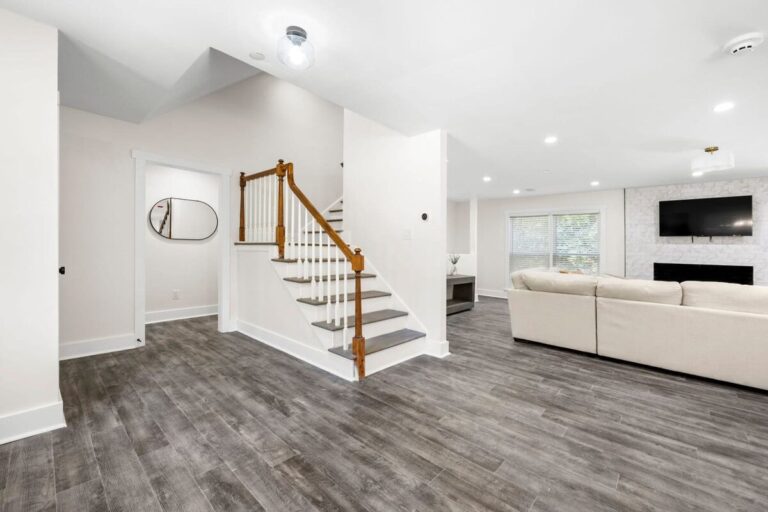

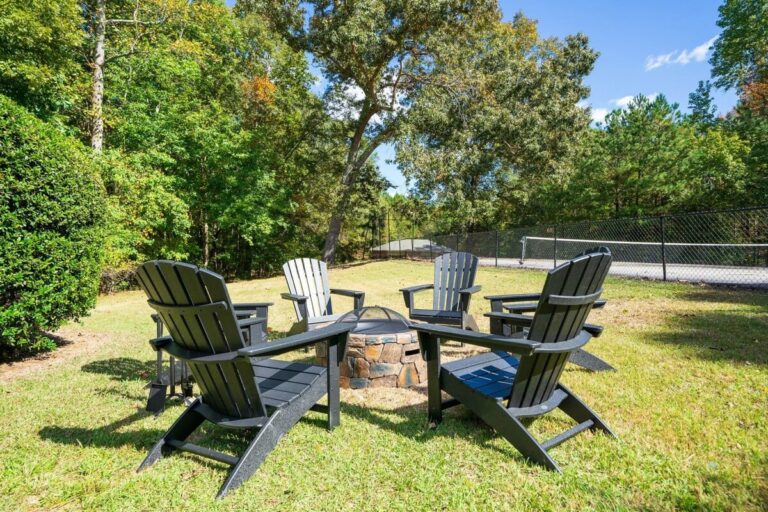

Tour Our Mental Health Facilities in Georgia
Who Actually Drives or Flies Up From Florida
Start with the awkward part. Partial hospitalization and intensive outpatient are, by design, local levels of care: you attend during the day and sleep somewhere else, and the whole logic assumes “somewhere else” is your own house. Driving several hundred miles to attend a program that sends you home every afternoon looks, on its face, like a contradiction.
People do it anyway, for reasons that hold up. The most common one is that the environment is the problem. When the apartment, the group chat, the standing Thursday, and the drive home all point in the same direction, a program that returns someone to that setting at 4:00 every afternoon is asking them to out-argue their own zip code. Of everything a treatment plan can adjust, the environment is the variable that moves fastest.
The second reason is insurance, and it surprises people. Florida carries one of the heaviest concentrations of military and veteran households in the country, from Pensacola and Eglin in the panhandle to MacDill on Tampa Bay and the naval stations on the Atlantic side, and Peachtree Wellness Solutions contracts directly with Tricare East, Select and Prime alike. Optum plans land here the same way. For a household that has spent a month being told they are out of network everywhere convenient, that can reorder the whole decision in one phone call.
The third reason is quieter. Some people cannot get well within driving distance of everyone who knows the worst version of them. Calling that avoidance is easy from the outside. For a stretch of weeks it is the only reason some people can concentrate on anything.
What Florida Already Has, and Where It Runs Thin
Looking outside Florida can feel like an indictment of everything at home. It should not. Florida runs a real system, and it is worth understanding before anyone books a thing.
Inside the Florida Department of Children and Families sits the Office of Substance Abuse and Mental Health, which the state designates as its single agency for this entire category of care. It does not run clinics itself. It contracts with seven Managing Entities, and each of those builds and oversees a provider network for its slice of the state (Florida Department of Children and Families, n.d.). If you have ever wondered why the answer to “what is available near me” swings so hard between counties, that structure is most of the reason.
The department is blunt about the consequence: what a region can offer through public dollars is capped by what that region is funded to offer (Florida Department of Children and Families, n.d.). That is a state agency putting in writing that geography rations care, and it matches what families describe. Broward and Miami-Dade are thick with programs. The I-4 corridor has real capacity and real waitlists at the same time. Move into the rural interior, the Big Bend, or the western panhandle and the map thins out fast, until the nearest open seat at the right level is already a two-hour drive nobody thinks of as “traveling for treatment.”
So the honest first move is not our phone line. Check what exists nearby before deciding it does not. The federal treatment locator filters by level of care and payment type, and the regional Managing Entity is the right call for publicly funded options (Substance Abuse and Mental Health Services Administration, n.d.). If a program near you can take you at the level you actually need, take it. Being close to home is a clinical advantage in its own right.
Five Hours or Ten: The Trip Is Not the Same From Every Part of Florida
Florida gets discussed as one market, which is useless in a state that runs almost 800 miles corner to corner. Broken into the pieces that actually decide whether this is workable:
- The panhandle: Pensacola runs up I-65 through Montgomery and over on I-85, roughly five hours. Tallahassee comes up US-319 and I-75 through Tifton in about four and a half. For this half of the state, metro Atlanta is a normal drive, closer than south Florida and far less complicated.
- North Florida: Jacksonville is about five and a half hours, west on I-10 to Lake City and then straight up I-75 through Valdosta and Macon. Gainesville and Ocala land between five and six and a half. Still comfortably a drive, done in a morning.
- The I-4 corridor: Orlando runs close to seven hours, Tampa about the same. Somewhere in here the drive stops making sense as a routine thing and starts making sense as a one-time move.
- South Florida: From Miami, Fort Lauderdale, or the Treasure Coast, it is ten hours or more. Nobody should plan that as a recurring trip. If care up here is right for a south Florida family, it is a flight.
Flying is often the cleaner answer, and Florida is unusually well set up for it. JAX, MCO, TPA, MIA, FLL, and PNS all run service into Hartsfield-Jackson, and Peachtree City sits about 45 minutes southwest of the airport in ordinary traffic, down I-85 and out GA-74. That is a rare piece of luck in this business, since the destination is closer to the terminal than most of Atlanta is.
The address is 100 Governors Trace, Peachtree City, GA 30269, in Fayette County. Piedmont Fayette Hospital is up GA-54 in Fayetteville. Newnan and Coweta County sit a few minutes west on GA-34, Senoia and Sharpsburg are south, and the city itself was built around a network of golf cart paths instead of sidewalks. Most of the people in the building are local, arriving from the south metro communities we serve. Florida clients join a program that is genuinely rooted somewhere, which is a different experience than a facility whose entire census flew in.
The Honest Version of the Outpatient Argument
This is where the pitch for out-of-state treatment usually gets slippery, so it is worth being direct. The standard case for outpatient care is that you practice new skills inside the life you actually live. You learn something in group on Tuesday morning, and by Tuesday night you are testing it against your own kitchen, your own commute, and the person who always calls at 9:00 p.m. Nothing has to be transferred later from a protected setting into a real one, because it was built in the real one.
For someone who drove up from Ocala and is staying in an extended-stay off GA-54, that argument does not hold the same way. They are practicing in a borrowed life. Pretending otherwise would be dishonest.
What the trip buys instead is still worth something: distance from the specific triggers that were winning, a full clinical schedule in place of a weekly hour, and a set of clinicians who have not already formed an opinion. What it costs is that the handoff home becomes the most important part of the plan rather than an afterthought. Discharge planning for a Florida client starts early and is mostly logistics with a clinical spine underneath. Who prescribes once you are back in Sarasota. Which therapist picks up the treatment plan in Pensacola. Which meetings you will realistically get to on a Wednesday in Ocala. A recurrence of symptoms, which most families call a relapse, gets caught far sooner when the follow-up clinician already has the chart and the next appointment is already on a calendar.
Level-of-care decisions are not improvised, either. The American Society of Addiction Medicine maintains The ASAM Criteria, the reference most programs use to decide how much structure a given person needs and when it is safe to loosen it (American Society of Addiction Medicine, n.d.). The idea underneath it is that support tapers as stability builds, in steps, instead of ending all at once on a Friday afternoon. Crossing a state line does not exempt anyone from that. It just means the step-down crosses a border too, which is why the questions any program should be able to answer before you commit are better asked now than in week five.
Where You Sleep, and What a Week Here Actually Looks Like
Programming here is community-based, which in plain language means there is no housing on the Governors Trace campus. Anyone coming from Florida stays somewhere local and drives in. In practice that is an extended-stay, a short-term rental, or a relative’s spare room in Fayette or Coweta County, and it is the single biggest thing to settle before a start date is worth discussing. Anyone who tells a family to figure out the sleeping arrangement later has not thought about it hard enough.
Two schedule facts decide whether traveling in is even possible, and they belong on the table before anyone buys a ticket. Every track on the schedule starts at 9:00 a.m. and runs Monday through Friday. There is no evening program here. Virtual and hybrid formats are listed as coming soon, which means they are not something to plan around today. If a schedule has to bend around a shift or a time zone, this is the wrong fit, and it is better to learn that on the first call.
The Weekly Shape
- Partial hospitalization: Weekdays, 9:00 a.m. to 4:00 p.m. The most structured option, for anyone whose sleep, appetite, and capacity to hold a workday have all given out, without needing an overnight bed. Partial hospitalization is usually where an out-of-state client starts.
- Intensive outpatient: Mornings only, five days a week from 9:00 a.m. to noon, or three days a week running slightly longer. Most people step into intensive outpatient from PHP as things steady out.
- The clinical core: A weekly individual hour with a master’s-level therapist, plus daily group work grounded in cognitive behavioral therapy, which works on the thinking patterns that show up right before things come apart, and dialectical behavior therapy, which is mostly practice at letting a feeling crest without acting on it. Work that is trauma-informed takes on the older material sitting underneath a current crisis.
- Body-based work: Somatic therapy, trauma-informed yoga, neurofeedback, Alpha-Stim, and a biosound room take on what months of running hot does to a nervous system, which talking alone does not always reach. Art and music therapy sit alongside them.
- Practical support: A gym on site and catered meals, because a program that runs through lunch should not also be a food problem for someone 400 miles from their own kitchen.
We treat adults through age 69. Mental health is the center of our work, and substance use is treated alongside it rather than handed off, since co-occurring conditions interact with each other and are usually better addressed together than one at a time (National Institute on Drug Abuse, n.d.). That reasoning is what dual diagnosis treatment is built on, and it is why medication-assisted treatment is available here, including buprenorphine as Suboxone or the monthly Sublocade injection, and naltrexone as a daily pill or the Vivitrol shot. Medication continuity travels: someone already stabilized on one of these in Florida does not have to interrupt it to attend, and our medical team arranges that during admission.
One boundary stated plainly, because it saves people a wasted trip. Medical detox is an earlier and separate step that happens under medical supervision elsewhere, and outpatient programming picks up once someone is medically stable. If withdrawal is still the live issue, that is what to solve first, and closer to home is usually better for it.
Insurance Across a State Line
The money question usually arrives second, right behind “would this even help.” For an out-of-state family it carries an extra assumption, which is that leaving Florida automatically means paying out of pocket. That assumption turns out to be wrong often enough to be worth checking before it decides anything.
Peachtree Wellness Solutions holds in-network contracts with two payers. One is Optum, the behavioral health network sitting behind UnitedHealthcare, UMR, Surest, and Oscar. Tricare East is the second, on the Select and Prime sides both. If one of those names is printed on your card, lead with it, because it moves the conversation from hypothetical to specific inside of a minute.
Networks are built out of contracts, not borders. Whether a plan pays here depends on whether this program sits inside the network attached to that policy, and plenty of Florida plans reach into Georgia without their members ever realizing it.
Federal parity law is what gives the question teeth: plans that cover medical and surgical benefits generally cannot impose harsher limits on mental health and substance use care than they impose on the rest of the policy (Centers for Medicare & Medicaid Services, n.d.). Parity governs the shape of a benefit rather than the dollar figures, so two households in Boca Raton carrying the same insurer’s logo can still owe very different amounts.
Benefits get run before anyone discusses a calendar. If a policy falls outside our contracts, that comes up on the first call along with a realistic picture of what out-of-network or private pay would mean, instead of arriving on a statement in October. How coverage works for treatment here is laid out before anyone asks you for a card number.
One more thing Florida families ask about and rarely get a straight answer on. Family therapy is built into the program, and 500 miles complicates it without cancelling it. Exactly how those sessions get arranged for a household still in Florida depends on the family and the week, so raise it during admissions rather than guessing.
We Work With Most Insurance
Most major health insurance plans with out-of-network benefits can cover the costs associated with our program. Find out your coverage options right now.





From a Florida Address to a Peachtree City Start Date
By the time a household is pricing flights, the argument about whether anything has to change is usually over. What is left is a pile of practical questions: airfare or gas, where to sleep, what the card covers, and whether the person this is about will actually go. Our admissions team takes those one at a time, sorts out which level of care fits, turns the coverage question into an actual number, and will say plainly if a program near Tampa or Jacksonville would serve you better than a five-hour drive would.
Making this call on behalf of someone who has not agreed to any of it yet is an ordinary way for these to begin, and it is not going behind their back. If today’s honest answer is “not this week,” nothing about that shuts a door, and plenty of Florida families sit with it for a month before calling again. If tonight has turned dangerous, calling or texting 988 connects you with the Suicide and Crisis Lifeline, free and confidential, on either side of the Florida-Georgia line.
FAQs About Mental Health Treatment for Florida Residents in Georgia
Does Peachtree Wellness Solutions have a location in Florida?
No. Our location, at 100 Governors Trace in Peachtree City, Georgia, is in Fayette County southwest of Atlanta. Florida residents attend by traveling here, which is a real commitment and not right for everyone. From the panhandle and north Florida it is a four-to-six-hour drive up I-65 or I-75. From Orlando, Tampa, and everything south, most families fly into Hartsfield-Jackson, which sits about 45 minutes northeast of the program. If a suitable program exists near you in Florida, that is usually the better choice, and admissions will say so.
Where do people from Florida stay while attending PHP or IOP?
They arrange their own local housing, most often an extended-stay hotel, a short-term rental, or a relative’s home in Fayette or Coweta County. Programming here is community-based, so there is no housing on the Governors Trace campus, and that arrangement needs to be settled before a start date means anything. It matters more than people expect: the first session of the day is at 9:00 a.m., weekdays only, so wherever you sleep has to be within a workable morning drive of Peachtree City.
Will a Florida insurance plan cover treatment in Georgia?
Frequently, yes. What decides coverage is usually the network attached to your policy rather than the state on your driver’s license. We are contracted in-network with Optum, which is the behavioral health network for UnitedHealthcare, UMR, Surest, and Oscar plans, and separately with Tricare East on Select and Prime, which reaches a great many Florida military households. Parity rules keep most plans from treating behavioral health worse than medical care, but your deductible, prior-authorization requirements, and session limits are written into your specific policy. Have admissions verify the card first, because guessing at this is how families end up with a surprise balance.
Sources
- American Society of Addiction Medicine. (n.d.). The ASAM criteria. Retrieved from: https://www.asam.org/asam-criteria. Accessed on August 18, 2026.
- Centers for Medicare & Medicaid Services. (n.d.). The Mental Health Parity and Addiction Equity Act (MHPAEA). Retrieved from: https://www.cms.gov/marketplace/private-health-insurance/mental-health-parity-addiction-equity. Accessed on August 18, 2026.
- Florida Department of Children and Families, Office of Substance Abuse and Mental Health. (n.d.). The system of services and support. Retrieved from: https://www.myflfamilies.com/services/samh/treatment-services/AMH/system-of-services-and-support. Accessed on August 18, 2026.
- National Institute on Drug Abuse. (n.d.). Co-occurring disorders and health conditions. Retrieved from: https://nida.nih.gov/research-topics/co-occurring-disorders-health-conditions. Accessed on August 18, 2026.
- Substance Abuse and Mental Health Services Administration. (n.d.). FindTreatment.gov. Retrieved from: https://findtreatment.gov/. Accessed on August 18, 2026.
- 988 Suicide & Crisis Lifeline. (n.d.). 988 Suicide & Crisis Lifeline. Retrieved from: https://988lifeline.org/. Accessed on August 18, 2026.