

Outpatient Mental Health Care for Charlotte Adults, Four Hours South
For people in Mecklenburg County whose local search has returned nothing but waitlists, our Peachtree City program is a genuine option, and the distance is the first thing worth being straight about.
The 6:40 train out of Scaleybark is full of people who look fine. Badges already clipped, coffee, the particular stillness of a car where nobody talks. Somewhere in it is an analyst who has been managing a panic disorder with three hours of sleep and a lot of caffeine, and a project manager whose drinking moved from Thursdays to most nights sometime last winter without a single conversation about it. Charlotte is very good at absorbing people who are quietly not okay. The city runs on competence, and competence is exactly what a person performs longest after everything underneath it has gone.
Peachtree Wellness Solutions provides adult outpatient mental health treatment at the south end of the Atlanta metro, and North Carolina is among the states we serve from Georgia. Whether you are the one holding it together or the one who stopped believing the “I’m just tired” answer a while ago, the useful question is not whether a four-hour drive is a lot. It is what level of care the last six months actually call for.



Why the Queen City Makes This Harder to Name
Charlotte’s professional culture is unusually good at rewarding people who do not flinch. Banking floors, the consulting firms, the energy and healthcare systems, the whole apparatus that grew up along Tryon Street runs on a version of steadiness that gets performed whether or not it is real. Vulnerability reads as a liability in a place where the next round of cuts is always a rumor away.
That has practical consequences for treatment. People wait longer. When they do look, they look privately, on a phone, late, and often for something outside the city where they will not run into a colleague in a waiting room in SouthPark or Ballantyne. And they gravitate toward whatever can be squeezed around a calendar, which usually means a weekly appointment that is not proportionate to what is happening.
There is nothing unique about Charlotte in the clinical picture underneath. What is specific is the delay, and the way a professional identity makes people hold out for an option that will not cost them anything visible. Most of the damage in these situations happens during the waiting, not during the treatment.
What Mecklenburg County Actually Offers, and Where It Runs Out
North Carolina has built out genuine crisis infrastructure, and it deserves an accurate description rather than a dismissal. Mobile Crisis Teams will meet a person in a safe place at no cost, day or night, and Open Access walk-in clinics provide same-day assessment, both coordinated through the state’s behavioral health division. Atrium and Novant both operate behavioral health services in the county. If tonight is an emergency, those are the right calls, along with 988.
The shortage is in the level above weekly therapy and below a hospital bed. A person discharged from a psychiatric unit on a Friday with a follow-up appointment in five weeks has a five-week hole in their care, and that hole is where most readmissions live. Structured programming several days a week is what fills it, and there is not enough of that anywhere, North Carolina included. The state’s own overdose surveillance data shows the visible edge of the demand, and behind those numbers sits a much larger population managing depression, anxiety, and trauma with no clinical structure at all.
If you have already worked the Charlotte list and come up with long waits, you were not searching badly. You found the actual shape of the system.
The Drive, and Why Some People Choose It
Getting here is straightforward. I-85 south out of Charlotte through Gastonia, across the upstate past Spartanburg, Greenville, and Anderson, then around the Atlanta perimeter and down GA-74 into Peachtree City. Roughly 250 miles, about four hours if the metro cooperates. Charlotte Douglas to Hartsfield-Jackson is under an hour and a half in the air, with about 45 minutes southwest from the terminals on the far end.
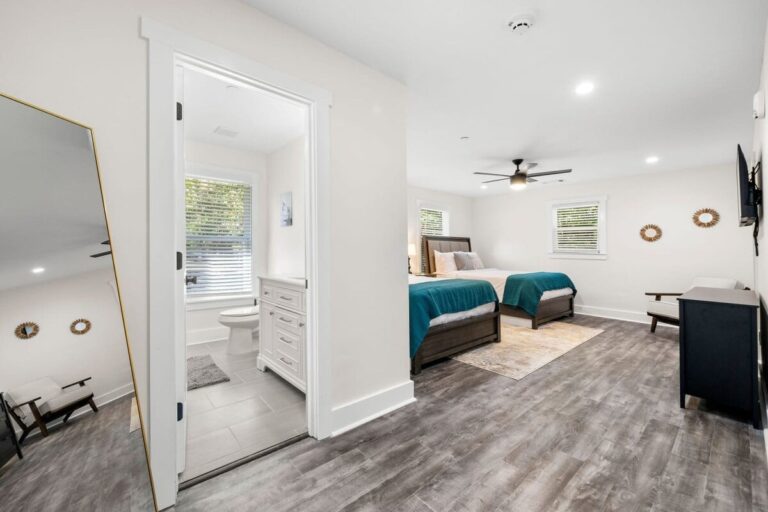
Programming happens in person, weekday mornings, at Governors Trace. That means treatment here involves staying in the area rather than commuting, and it is the single fact most likely to decide whether this is workable for your household. Our admissions team works through those arrangements with you rather than expecting them solved in advance.
Some people choose the distance rather than tolerating it, and the reasoning is worth understanding. A mental health condition installs itself in a specific life: the commute up I-77, the desk, the group chat, the same room at 9 p.m. where the spiral runs. Treatment inside that architecture spends half its energy fighting it. Four hours is enough separation for a nervous system to stop bracing, and close enough that a spouse can drive down on a Saturday for family therapy and be home that night. Households reorganize themselves around a serious illness, and that reorganization usually needs its own repair.
What the Weeks Look Like
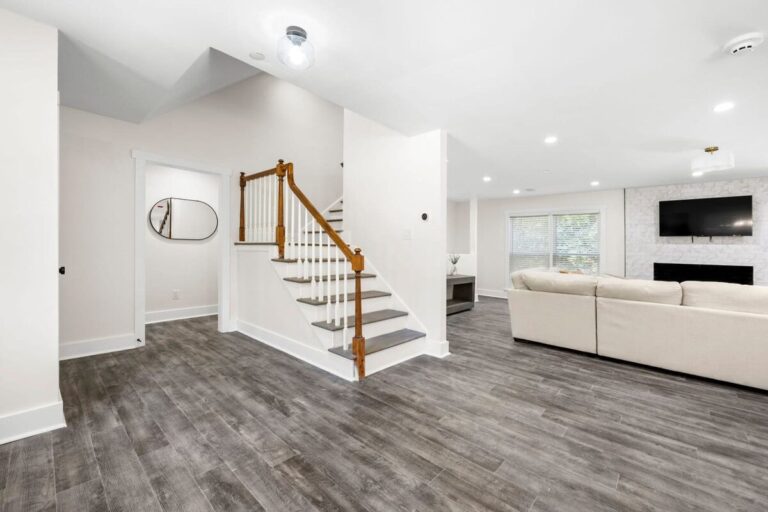
Peachtree City was laid out around 100 miles of golf-cart paths and a deliberate decision to keep through traffic somewhere else. Coming off GA-54 into a program where the lot is quiet is a materially different arrival than fighting I-277 to get to an appointment Uptown, and for someone whose system has been in a fight for months, low stimulation is closer to a condition of the work than an amenity.
A partial hospitalization program fills most of a weekday and suits someone whose functioning has genuinely come apart. An intensive outpatient program runs about three hours a morning and leaves the rest of the day workable. Most people move from the first to the second as things steady.
The Clinical Work Itself
- Cognitive behavioral therapy: CBT takes apart the thought patterns that have calcified into rules, which is slow work a weekly hour rarely reaches.
- Dialectical behavior therapy: DBT builds distress tolerance, meaning specific things to do with your body when a feeling arrives faster than reasoning can catch it.
- Trauma and anxiety programming: Complex PTSD treatment and anxiety treatment address what the high-functioning version has been covering.
- Psychiatric care with genetic testing: Medication management runs alongside therapy, with pharmacogenetic testing narrowing which medications a person is likely to tolerate instead of trying them one at a time over a year.
- Co-occurring substance use: Where drinking has become part of how someone manages, dual diagnosis treatment works on both together.
Insurance, Which Is Usually the Deciding Fact
Network status follows the plan, not the state line, and this is where the Charlotte answer is better than most people assume. Peachtree Wellness Solutions is in-network with Optum, which covers UnitedHealthcare, UMR, Oscar, and Surest plans, and with TRICARE East Select and Prime. UnitedHealthcare is carried by a large share of Charlotte’s corporate employers, and a Mecklenburg County resident holding that card is in-network here exactly as they would be at home.
Federal parity law requires most plans covering mental health and substance use treatment to apply comparable rules to those benefits as to medical care, which is why this level of treatment is a covered benefit rather than a discretionary one. It does not make plans identical. Deductibles, prior authorization, and length-of-stay review differ, and the only honest way to get your number is to have someone read your policy. Our team does that up front, and if your plan is not one we contract with, you will hear it at the start rather than after an assessment.
We Work With Most Insurance
Most major health insurance plans with out-of-network benefits can cover the costs associated with our program. Find out your coverage options right now.





From Charlotte, the First Step Is an Assessment, Not a Decision
Nobody should commit to four hours of interstate before knowing whether this is even the right level of care. A first call is a conversation in which a clinician hears what the past several months have actually looked like and says plainly whether structured outpatient treatment fits, whether something closer to Mecklenburg County would serve better, or whether the picture needs a different level first. Family members call and ask their own questions before the person in question is involved, which is a normal and useful way to start. Reach the Peachtree Wellness Solutions admissions team and we will go through your benefits and what a first week involves. If tonight is dangerous, call or text 988 first; this will keep until morning.
Faqs About Mental Health Treatment for Charlotte Residents in Georgia
About 250 miles and four hours, almost entirely on I-85 through Gastonia, Spartanburg, Greenville, and Anderson before the Atlanta metro. Flying, Charlotte Douglas to Hartsfield-Jackson is under 90 minutes with roughly 45 minutes southwest to Peachtree City. Whether you can keep working depends on which level of care fits. Intensive outpatient runs about three hours in the morning and leaves the afternoon open, which some people manage remotely; partial hospitalization takes most of the weekday and generally does not. That is decided in the assessment, not in advance.
Peachtree Wellness Solutions is in-network with Optum, which includes UnitedHealthcare, UMR, Oscar, and Surest plans, and with TRICARE East Select and Prime. UnitedHealthcare is common across Charlotte’s larger employers, and network status follows the plan rather than the state, so crossing into Georgia does not by itself put you out of network. Deductibles, authorization requirements, and length-of-stay review still vary by policy, so the admissions team reads your specific plan and tells you what it covers before anyone is admitted.
Because programming is in person on weekday mornings, adults coming from Charlotte arrange temporary local housing for the length of treatment rather than commuting. Options in Fayette and Coweta counties range from extended-stay accommodation to staying with family in the metro. Our admissions team works through this with you as part of planning the admission. It is the practical detail most likely to determine whether this is realistic for your household, which is why it belongs in the first conversation.
Then we will tell you that. Mecklenburg County has real resources, including Mobile Crisis Teams that meet people at no cost and Open Access walk-in clinics offering same-day assessment through the state behavioral health division, plus hospital-based behavioral health services. Most North Carolina families reach us after the local search has returned long waits for the structured, several-days-a-week level of care specifically. An assessment costs a conversation, and being told the right answer is closer to home is a useful outcome rather than a wasted call.
Sources
- North Carolina Department of Health and Human Services. (n.d.). Crisis services. Retrieved from: https://www.ncdhhs.gov/divisions/mental-health-developmental-disabilities-and-substance-use-services/crisis-services. Accessed on September 12, 2026.
- North Carolina Division of Public Health, Injury and Violence Prevention Branch. (n.d.). North Carolina overdose epidemic data. Retrieved from: https://www.dph.ncdhhs.gov/programs-services/chronic-disease-and-injury/injury-and-violence-prevention-branch/north-carolina-overdose-epidemic-data. Accessed on September 12, 2026.
- National Institute of Mental Health. (n.d.). Anxiety disorders. Retrieved from: https://www.nimh.nih.gov/health/topics/anxiety-disorders. Accessed on September 12, 2026.
- National Institute of Mental Health. (n.d.). Depression. Retrieved from: https://www.nimh.nih.gov/health/publications/depression. Accessed on September 12, 2026.
- Centers for Medicare & Medicaid Services. (n.d.). The Mental Health Parity and Addiction Equity Act (MHPAEA). Retrieved from: https://www.cms.gov/marketplace/private-health-insurance/mental-health-parity-addiction-equity. Accessed on September 12, 2026.
- Substance Abuse and Mental Health Services Administration. (n.d.). Co-occurring disorders. Retrieved from: https://www.samhsa.gov/substance-use/treatment/co-occurring-disorders. Accessed on September 12, 2026.
Overview
- Where it is: Peachtree Wellness Solutions is at 100 Governors Trace in Peachtree City, Georgia, about 250 miles and four hours from Uptown Charlotte, essentially all of it on I-85. The program is not located in North Carolina.
- What it is: Adult partial hospitalization and intensive outpatient mental health treatment, in person on weekday mornings, with co-occurring substance use treated alongside.
- Who it fits: Adults who are past an acute crisis and nowhere near steady, and for whom a weekly therapy hour has stopped being enough.
- Coverage: In-network with Optum, covering UnitedHealthcare, UMR, Oscar, and Surest plans, and with TRICARE East Select and Prime.
- The catch: This is outpatient care, so coming from Charlotte means arranging somewhere to stay for the length of the program. That is a housing conversation, and it belongs at the start rather than three weeks in.